
In short
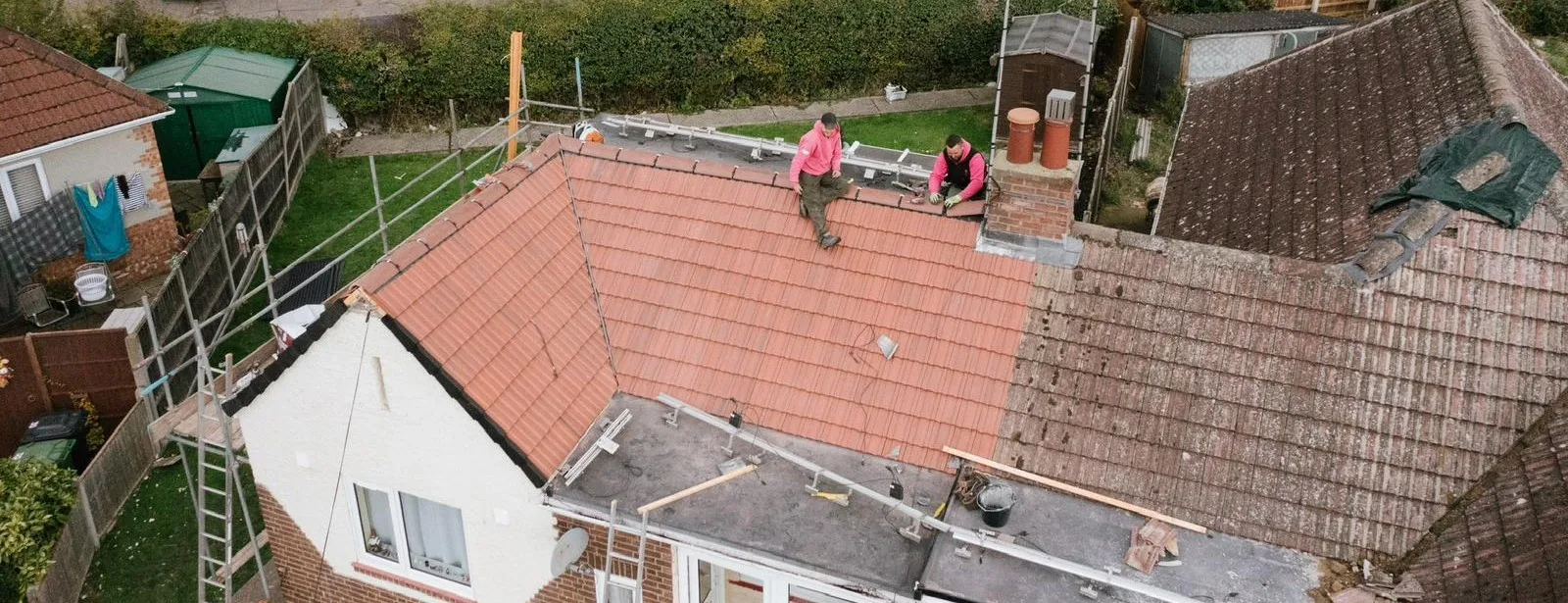
You stay in the house. Checkatrade's 2026 roof replacement guide says a roof takes up to a week to replace depending on size, and a slate roof sits at the slower end because the slates are sorted and holed by hand and the battens are set out to suit them. The roof is never left open overnight: each slope is stripped, felted and battened the same day, so you are under a weatherproof membrane at worst, not the sky.
This is a job for our Slate roof replacements service.
Published · Last updated
What happens on each day
Every roof is different, so this is the shape of the job rather than a promise. The order matters more than the day numbers.
- Scaffold goes up. Usually a day or two before we start, by the scaffolders. HSE guidance requires edge protection for sloping roof work, so this is not optional and it is not us being cautious.
- Strip. We strip one slope at a time. The slates come down, and if they are being reused they are stacked, graded and the broken ones set aside. Old battens and felt go in the skip.
- Timbers checked. This is the first time anyone has seen the rafters in a century. Rot at the eaves and around the chimney is dealt with now, and it is the one thing that can add days.
- Membrane and battens. Breathable membrane and new treated battens go on the same day the slope was stripped, so it is watertight before we leave.
- Slating. From the eaves up, with the leadwork at the chimney and abutments dressed in as we go. New ridge, mechanically fixed.
- The other slope, and then the scaffold comes down.
Reusing your own slates takes longer
Good Welsh slate outlives its nails several times over. On the older houses we re-roof in Holt, Aylsham and around north Norfolk the slate is usually fine and the nails have gone, which is the nail sickness described in our repair-or-replace post. Relaying your own slates is the right thing to do, but every slate has to be checked by ringing it, sorted by thickness and re-holed. That is slower than opening crates of new slate. It also means we normally need a small quantity of matching reclaimed or new slate to make up the broken ones.
Living underneath it
- Noise. Stripping is loud and dusty for the first part of each slope. Slating is quieter.
- The loft. Grit and dust come through the old ceiling. Cover anything stored up there before we start, or let us sheet it.
- Power and water. We do not need either off. We run tools off our own supply where we can.
- The garden. The skip, the scaffold and the slate pallets need space. Cars are best moved off the drive for the week.
- Weather. Work stops in high wind and heavy rain, which on the coast can cost a day. The slope is already under membrane, so you are not at risk, but the finish date moves.
What changes the timetable
Rotten timbers, a chimney that turns out to need rebuilding while the scaffold is there, dormers and valleys, and a roof with several small slopes rather than two big ones. Planning Portal notes that re-covering a roof should also include improving its insulation, so if the loft is under-insulated we do that from inside while the roof is open. None of these are surprises if the roof has been looked at properly first, and we tell you which apply before we quote.