
Norfolk
Roofing in Wells-next-the-Sea
Xcell Roofing Ltd proudly serves Wells-next-the-Sea and the surrounding area.
Wells is a working harbour town with a lot of older brick and flint property packed tightly around the quay and the yards behind it. Roofs are close together, access is often through a narrow lane, and scaffold needs planning rather than assuming.
Salt and wind do the same work here as they do along the rest of the coast, so in NR23 we fix for exposure and we expect fixings on older roofs to have corroded.
What the roofs in Wells are made of
The old town is mostly 17th, 18th and early 19th century, and it largely missed the late Victorian building boom that reshaped Cromer and Sheringham. North Norfolk District Council's appraisal of the conservation area describes the 17th century buildings as almost all flint with red brick dressings under pantile roofs, typically two and a half storeys with dormers set into a steep pitch. Through the 18th century brick took over from flint on the fronts, but the pantile stayed.
There are variations worth knowing about before anything is stripped. Black glazed pantiles were used on some of the more prestigious houses, grey smut pantiles turn up on some of the houses around The Buttlands, and slate is found on only a few buildings. When we replace a roof here we photograph and record what is on it first, so that what goes back matches the house rather than whatever tile is easiest to buy.
New roofs and roof replacement in Wells
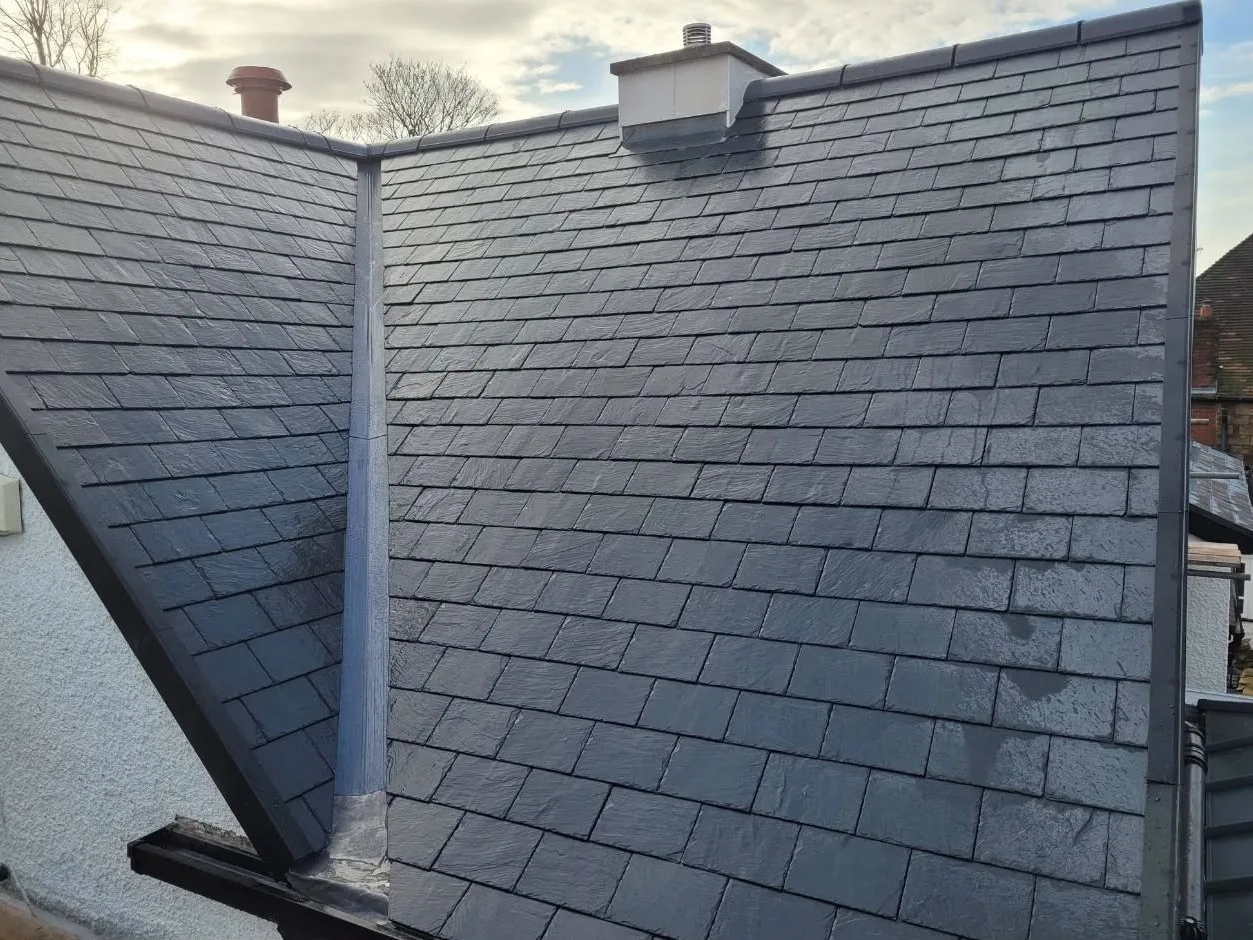
A steep pantile roof on a flint cottage in one of the Yards and a concrete tile re-cover on a bungalow at the edge of town are two different jobs, and we price them separately after a survey. On the older roofs a replacement usually means stripping to the rafters, repairing the timbers that need it, new breathable membrane and battens, then relaying the sound tiles and making up the shortfall with the closest match. Dormer cheeks, abutments and chimneys get new lead at the same time, because on a coastal roof that is where the water gets in. The detail is on our new roofs in Wells-next-the-Sea page.
The Wells conservation area
Wells-next-the-Sea has been a conservation area since 1974 and is managed by North Norfolk District Council. It takes in the Quay and the Yards, Staithe Street, the High Street and The Buttlands. A listed building needs listed building consent for work that affects its character, and in a conservation area some alterations need planning permission that would not be needed elsewhere. We check the status of the building at survey and tell you what is likely to apply before you choose a material.
Where to go next in Wells
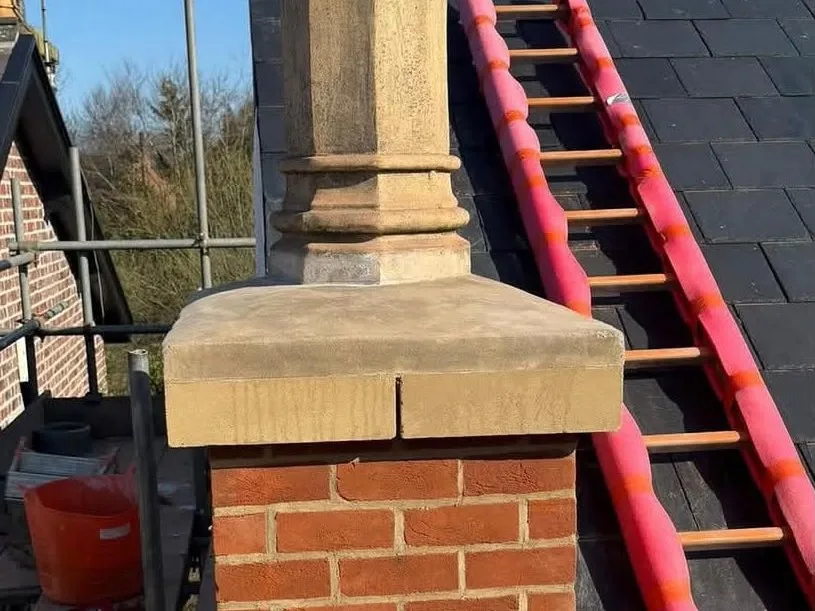
For a leak, slipped tiles or storm damage, see roof repairs in Wells-next-the-Sea. For stacks, flaunching and flashings, see chimney repairs in Wells-next-the-Sea. If you are not sure whether the roof needs mending or replacing, our guide on whether to repair or replace a roof sets out how we decide, and our tiled roofing page covers pantile work in general.
Our services in Wells-next-the-Sea
Recent work near Wells-next-the-Sea
Roofing in Wells-next-the-Sea: your questions
Do you replace whole roofs in Wells-next-the-Sea, or only repair them?
Both. We carry out full roof replacements across NR23 as well as repairs. We survey first, photograph what we find and give you a free written quote that says which work is needed and why, so you can see for yourself whether a repair will do or the roof has reached the point of replacement.
Can you match the old pantiles on a Wells cottage?
Usually, yes. Red clay pantile is the common covering in the old town, with black glazed pantiles and grey smuts on some of the grander houses. We sort the sound tiles as we strip and put them back, and make up any shortfall with new or reclaimed pantile to match.
Will I need permission to re-roof in the Wells conservation area?
It depends on the building. A listed building needs listed building consent for work that affects its character, and the roof is part of that. On unlisted property a like for like re-roof is often straightforward, but a change of material may not be. We check at survey and tell you before you commit.
How do you get scaffold into the Yards behind the Quay?
We look at access at survey, not on the first morning. Tight access around the quay is normal here rather than exceptional. We work out how the scaffold goes up at survey and price it accordingly.
Ready to get started?
Tell us about your project and we'll be in touch.