Norfolk
Chimney repairs in Wells-next-the-Sea
Stacks repointed, re-leaded, rebuilt or removed across NR23, with the access and the scaffold planned before we start.
Chimney work in Wells starts with a question that has nothing to do with the chimney: how do we get to it. The older property around the quay and the yards behind it is packed tightly together, a lot of it is reached through a narrow lane, and a stack sitting between two roofs on a shared party wall cannot be worked on safely off a ladder. We look at the access at survey and plan the scaffold then, rather than turning up on the first morning and discovering it.
What the salt does to a stack
Wells takes the same wind and the same salt as the rest of this coast, and a chimney is the part of the building most exposed to both. Mortar joints soften from every direction rather than one, the fixings holding lead in place corrode faster than they would inland, and on the older brick and flint property the brickwork behind failed pointing starts taking water directly.
Repointing and flaunching
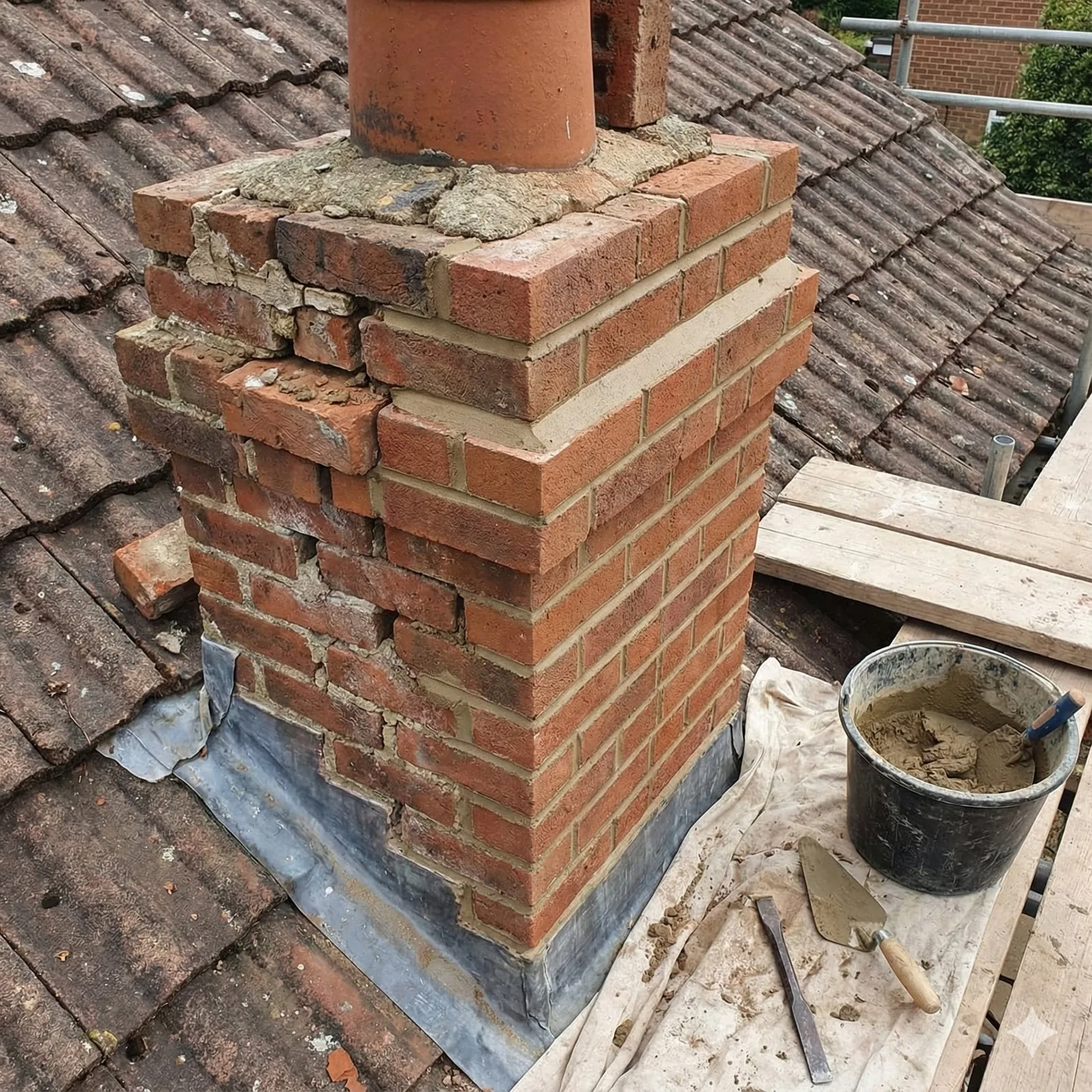
We rake out and repoint in a mix suited to the brickwork, which on the older stacks around the harbour means lime rather than a modern cement that is harder than the brick it is meant to protect. The flaunching, the mortar weathering at the top that beds the pots and throws water clear, is the part that cracks first and is noticed last. Once it goes, rain runs down inside the stack instead of off it and turns up as damp on a bedroom wall.
Lead flashings
Apron, soakers and the back gutter behind the stack. Old lead cracks along its fold lines as it moves with the temperature, and a bead of sealant run over the crack is a holding measure that will not see out a winter here. We strip it out and form new lead to code.
Rebuilds
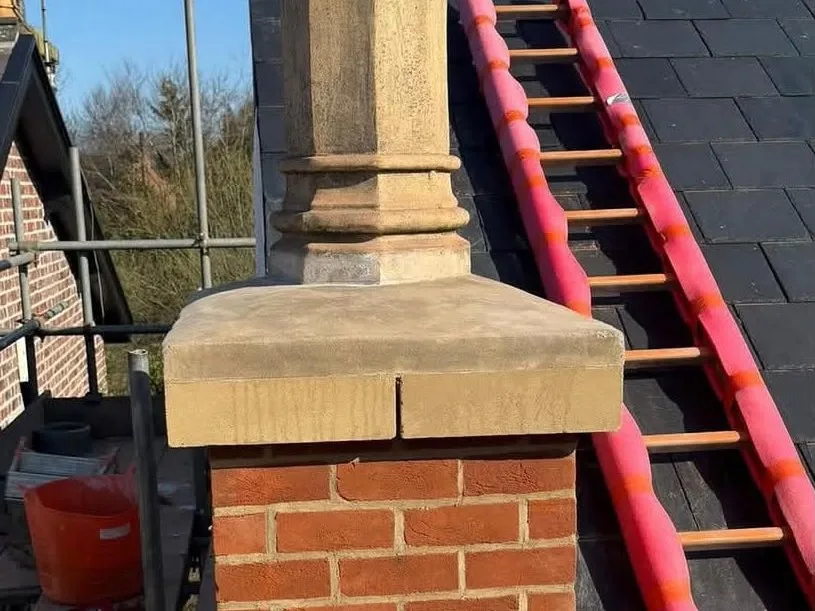
Where a stack has moved or lost its bond we take it down to a sound course and rebuild, reusing the original brick wherever it is good enough. On a tightly built harbour town frontage that matters more than it would on an estate: the chimneys are part of the roofline, and a rebuild in the wrong brick is visible from the quay for the rest of the building's life.
Pots, cowls and capping
Cracked pots replaced, bird guards on working flues, and cowls where a stack downdraughts, which on an exposed coastal property with buildings close on either side is a common complaint. Redundant stacks are capped so they stay ventilated rather than sealed, because sealing a flue completely traps damp inside the brickwork and inside the chimney breast below it.
Taking a stack down
A redundant chimney in poor condition can be taken down to roof level and the roof made good over the top, tied properly into the existing covering. It ends the maintenance for good. Where the stack is shared with next door, that is a conversation to have with the neighbour before the work rather than halfway through it, and we will inspect and photograph the whole stack so there is something to have the conversation about.
How we work
We get up and look, because a chimney cannot be assessed from the ground, and you get photographs of what is up there. The scaffold is priced into the quote from the start rather than appearing as an extra once the job has begun.
Recent work near Wells-next-the-Sea
View all projects →
Chimney repairs in Wells-next-the-Sea: common questions
My stack is shared with next door. Can you still work on it?
Yes, and it is worth both households agreeing the work before it starts rather than after. We inspect and photograph the whole stack and give a written quote that sets the work out clearly, which is usually what settles who is paying for what.
The lane to my house is very narrow. Is scaffold possible?
Nearly always, with planning. Tight access around the quay is normal here rather than exceptional. We work out how the scaffold goes up at survey and price it accordingly instead of treating it as a surprise.
Should a disused chimney be sealed up completely?
No. A capped stack still needs to breathe, otherwise damp gets trapped in the brickwork and in the chimney breast inside the house. We cap them ventilated.
Ready to get started?
Tell us about your project and we'll be in touch.