In short
No. A pressure washer strips the surface off concrete tiles, drives water up under the laps and into the felt, and dislodges any tile whose nail has gone. Checkatrade's 2026 roof cleaning guide lists damaging or dislodging tiles and moss returning sooner as the drawbacks, and puts hand removal with a biocide treatment at around £11.50 per square metre against £8.50 for pressure washing. We scrape by hand, treat, and clear the gutters after.
This is a job for our Roof cleaning and moss removal service.
Published · Last updated
What a pressure washer does to a roof
Moss sits on the tile, but the tile is not what a jet of water at pressure hits first. It hits the laps, the joints and the fixings.
- Concrete tiles lose their face. The coloured, dense surface of a concrete tile is thin. Blast it off and the tile is porous underneath, which holds more water, grows moss faster and frosts worse. The roof looks clean for a season and rougher for good.
- Water goes uphill. Tiles keep rain out because it runs down. A jet pointed up the slope pushes water under the laps and onto the felt. Old bitumen felt that has never been wet from above starts leaking into the loft.
- Loose tiles come off. On any roof over a few decades old, some tiles are held by habit rather than by a nail. A pressure washer finds them.
- Mortar goes with the moss. The bedding on the ridge and the verge is often the softest thing on the roof. It washes out with the moss and the ridge tiles are left loose.
Checkatrade's guide lists the same three drawbacks in one line: it can damage or dislodge tiles, moss returns sooner without treatment, and it is not suitable for older or more delicate roofs. Most of the roofs we clean in Norfolk are older.
Why the moss is there
Moss grows where a tile stays damp: north-facing slopes, under trees, and on roofs with a rough or porous surface. That is why it is worst on the north side of the older concrete-tiled roofs around Dereham, Watton and Thetford, and why a pressure wash that roughens the tile makes the next growth worse.
What we do instead
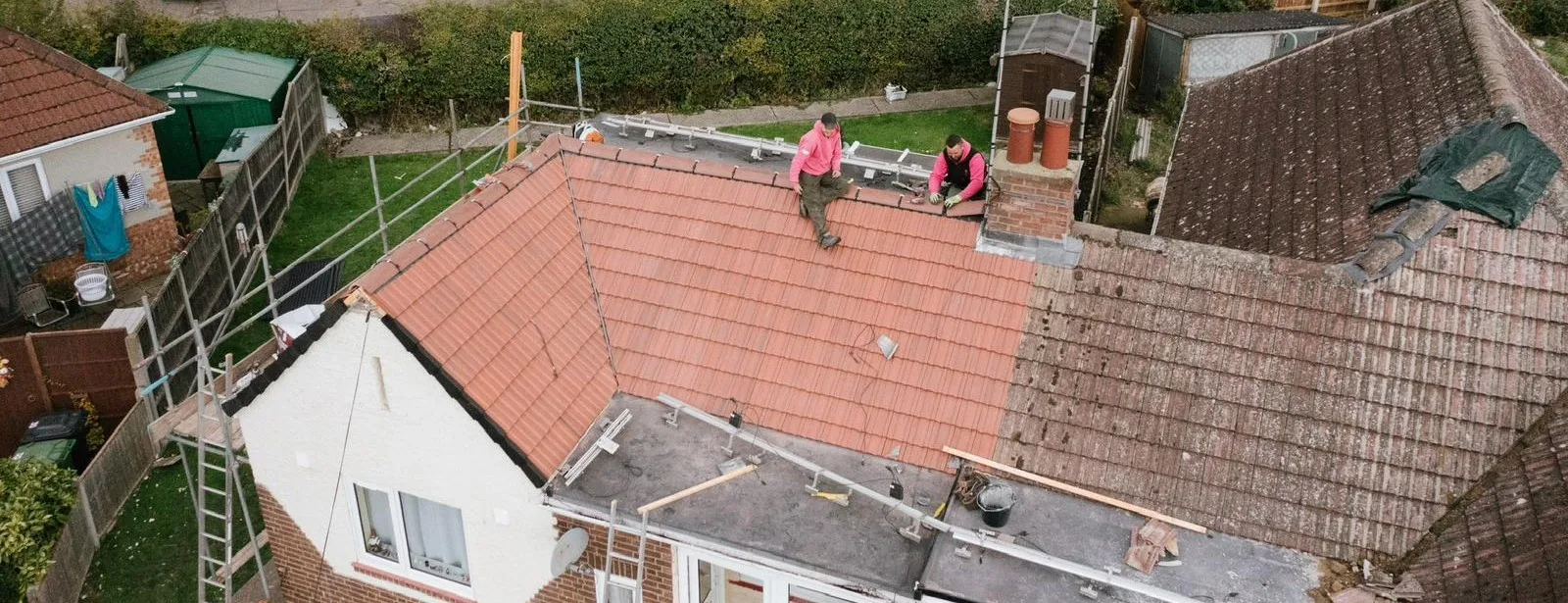
- Scrape by hand. Off a scaffold or roof ladder, working down the slope with a scraper, so nothing is pushed under the laps. Loose tiles and open mortar are noted as we go.
- Bag it. Moss is not left in the gutters or on the lawn.
- Treat. A biocide applied to the cleaned tiles slows regrowth. Checkatrade's guide makes the same point: without treatment the moss comes back sooner.
- Clear the gutters, fascias and soffits. The moss that was on the roof has been going down the gutters for years, and a full gutter is the commonest reason a roofline rots.
What it costs, by their figures
| Method (Checkatrade, April 2026) | Range per m² | Average per m² |
|---|---|---|
| Pressure washing | £5 to £12 | £8.50 |
| Hand removal and biocide | £8 to £15 | £11.50 |
| Soft washing | £12 to £16 | £14 |
| Scaffolding, if needed | £16 to £20 | £18 |
Those are national averages before VAT, not our prices. The difference between the first two rows is the labour of doing it by hand, and it is less than the cost of the first broken tile or the first leak into the loft.