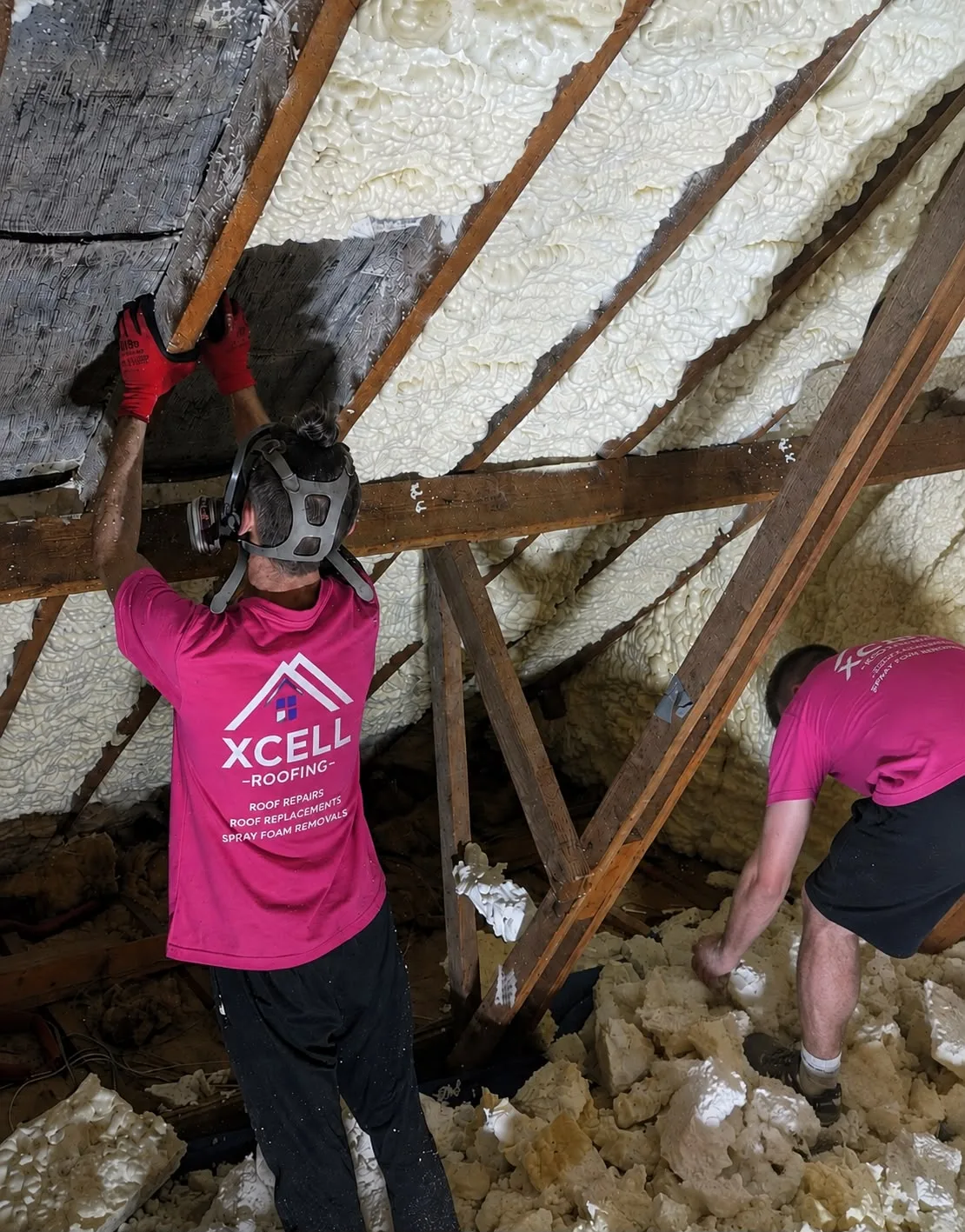
Spray foam removal is one of the services we specialise in. We take out both open cell and closed cell foam, and we do it taking as much care of the existing roof structure as the job allows.
Spray foam was sold hard as a loft insulation upgrade. What a lot of homeowners found out afterwards is that most lenders will not offer a mortgage on a house with foam sprayed onto the underside of the roof, and surveyors regularly down value or refuse. Whether you are dealing with a sale, a mortgage condition, a concern about the roof itself or simply want it gone, we will inspect the property and tell you where you stand.
Why spray foam becomes a problem
Foam does not automatically mean the roof is damaged. But depending on the type, how it was applied and how the roof is built, it creates complications:
- Mortgage and valuation difficulties. Some lenders and surveyors require investigation or removal before they will proceed at all.
- Hidden roof defects. Foam makes the structure and the underside of the covering impossible to inspect.
- Moisture and timber deterioration. Where moisture is trapped or the ventilation is inadequate, concealed decay and rot can develop.
- Leaks are harder to identify. Water can run behind foam for a long time, so by the time a stain appears on a bedroom ceiling the damage above it has been developing for months.
- Damage stays hidden. Felt, battens and structural timbers can be affected long before anybody knows there is a problem.
- Sale complications. Foam causes concern at survey, at valuation and at mortgage application.
To be straight with you, plenty of the roofs we inspect turn out to have no significant structural damage. That is not the point. Insulation is meant to reduce heat loss, but a roof still has to be correctly built, ventilated and capable of being inspected and maintained, and a surveyor who cannot see a roof will not sign it off.
We inspect before we remove anything
Before any removal begins we carry out a detailed inspection of the roof space. We are working out how the foam was applied, what condition the roof structure is in, and whether the foam can be taken off safely without unnecessary damage to the roofing membrane.
If the foam has bonded heavily to the felt, penetrated through the laps, or removal would risk the roof itself, we explain that to you before we start and talk through the options. Our aim is not simply to get the foam out. It is to leave you with a roof space that can be properly inspected and maintained from here on.
What the removal involves
- Removal from inside the loft. Open cell and closed cell foam both taken off, sheeted and contained so it does not end up through the rest of the house.
- Cleaning around the timbers. Careful cleaning around the rafters, roof timbers and membrane once the bulk is off.
- Sanding down. Rafters and accessible timbers sanded to take off the remaining traces of foam wherever that is practical.
- Inspection as we go. The structure is checked for visible moisture, deterioration and timber damage as it becomes visible, and photographed.
- Disposal. All the foam and associated waste bagged, removed and disposed of responsibly, and the loft left clear.
- Insulation topped up. Loft insulation brought up to the required standard, where that is included in the quotation and appropriate to the roof.
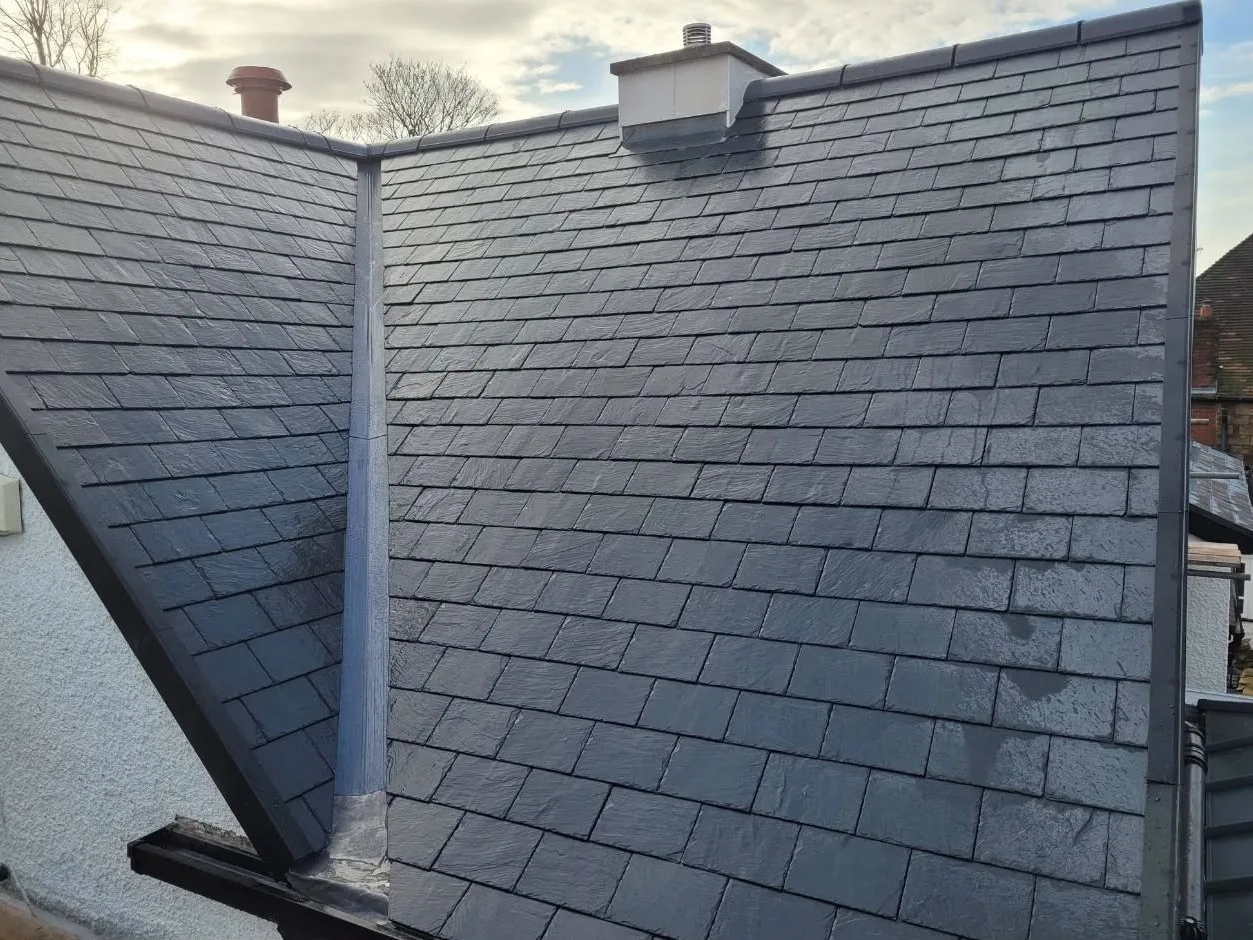
- Making the roof right again. Depending on what is underneath, that can mean new breathable membrane, timber repairs or a full re-cover. We price the options rather than assume the biggest one.
- Final inspection. Once the removal is finished, the whole roof space is inspected again.
Your spray foam removal certificate
Once the agreed works are complete you get a spray foam removal certificate detailing the work we carried out, along with photographs and a written record of the condition of the roof afterwards.
That is the paperwork a surveyor or a lender will ask you for, and it is worth keeping with the property documents. It is usually what gets a stalled mortgage or sale moving again.