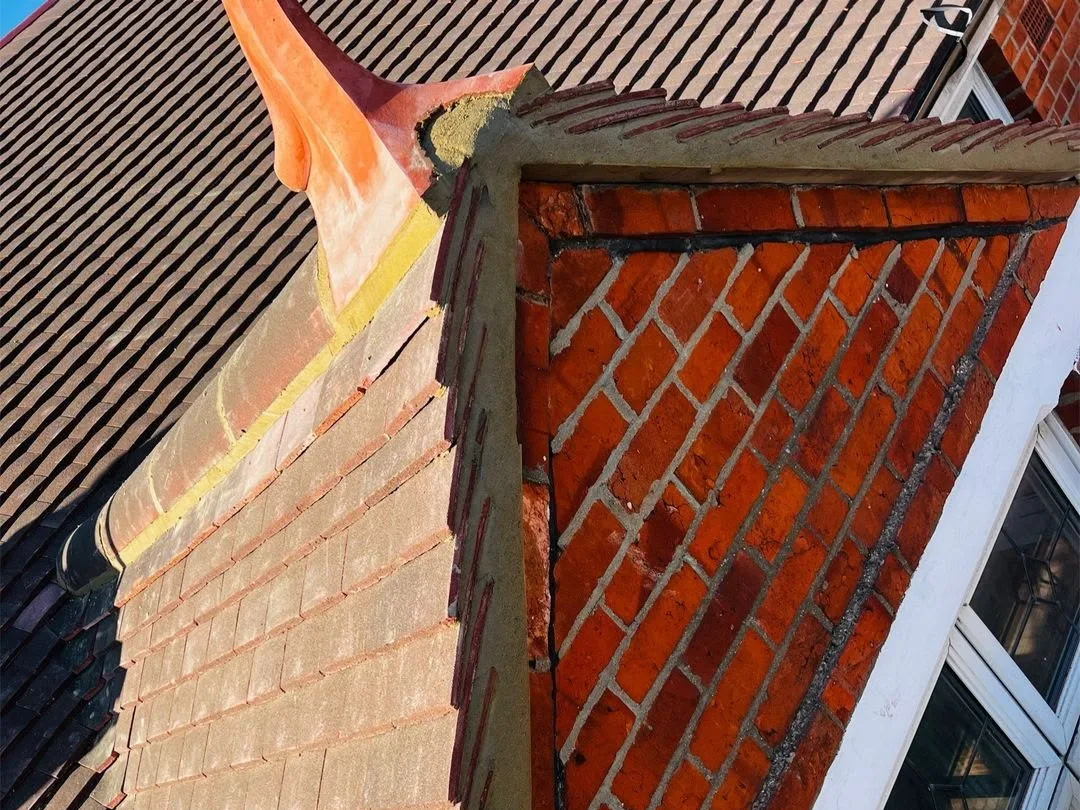
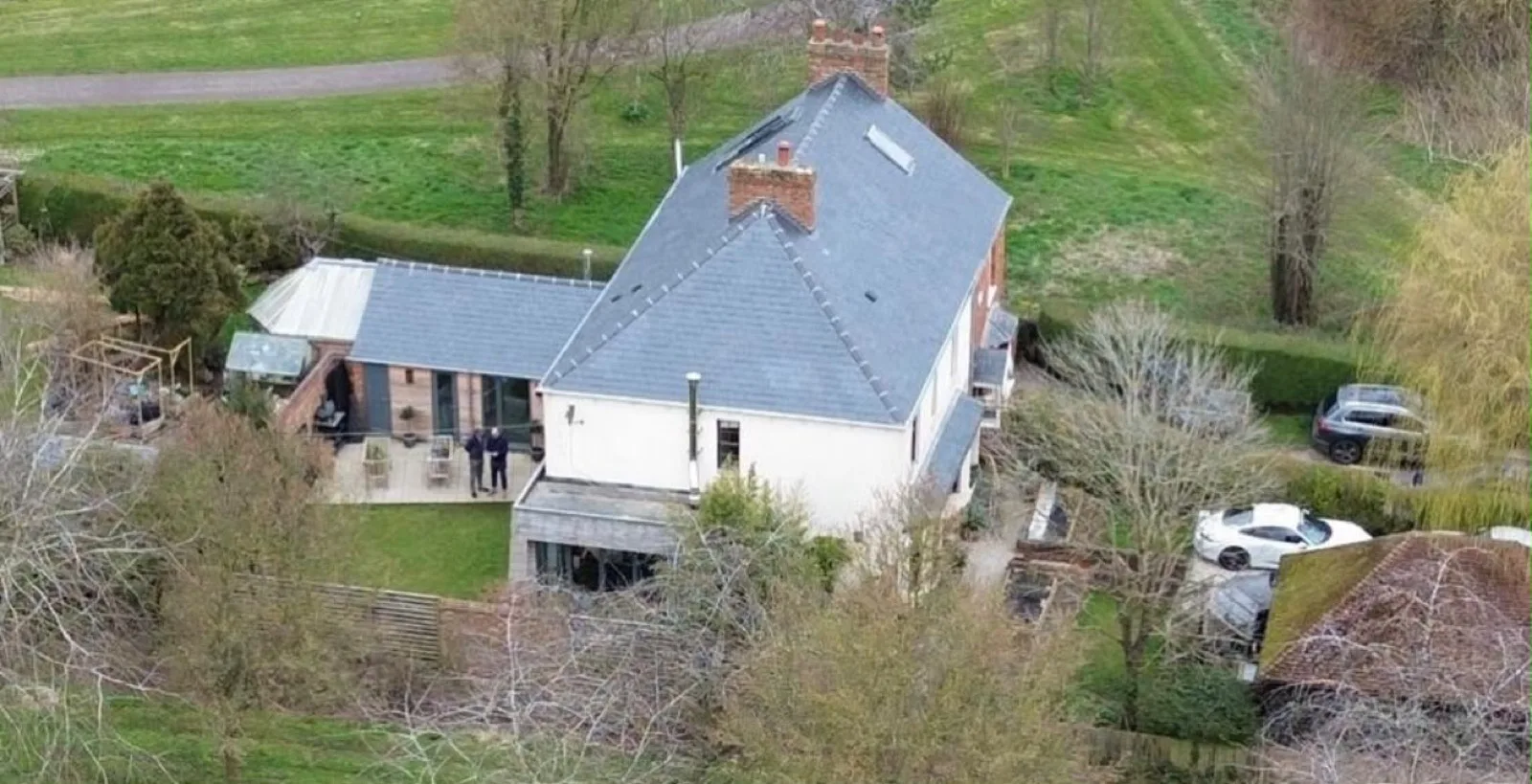
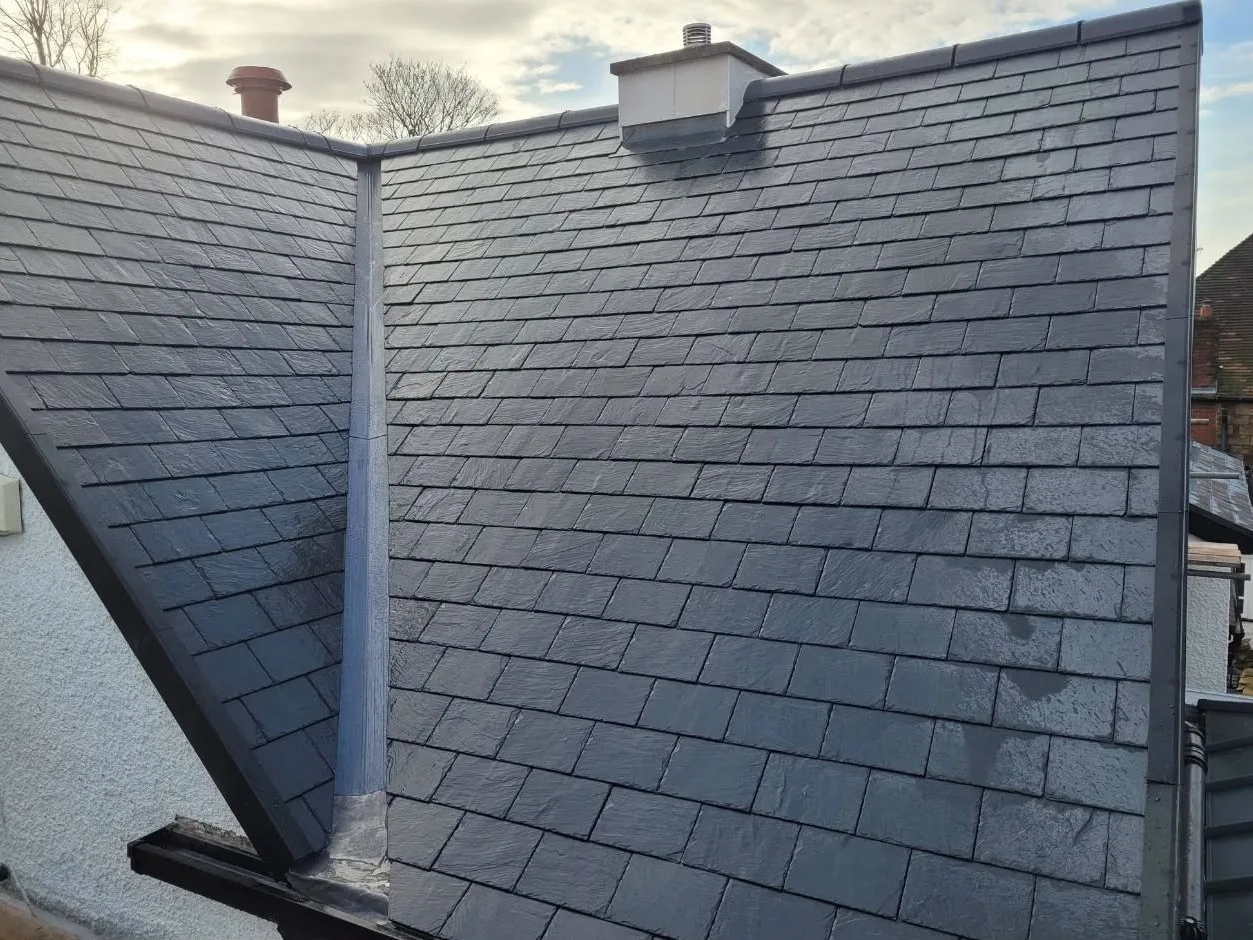
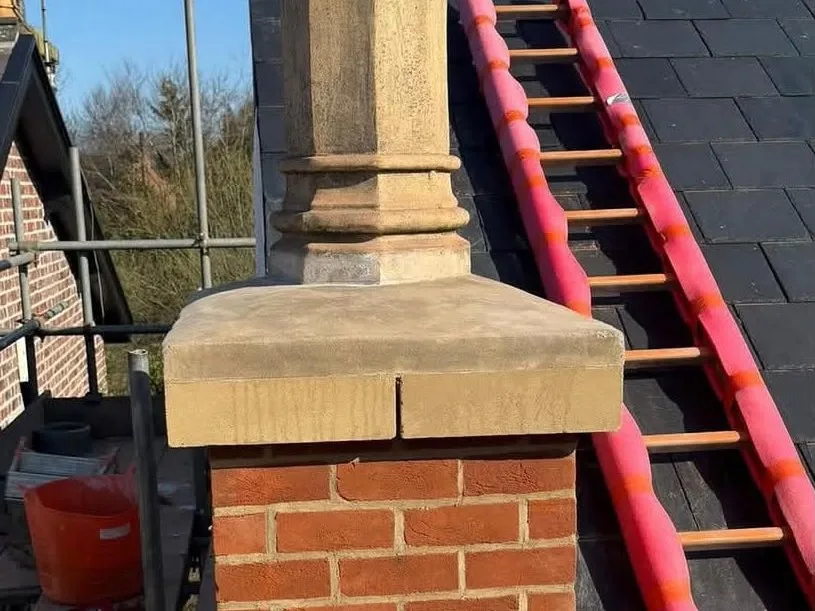
Cracked, loose or crumbling mortar around ridge tiles, roof valleys and gable ends is one of the most common defects we are called out to look at. It starts small, usually a hairline crack or a short length of mortar beginning to break away at the edge, and it is easy to miss from the ground.
It does not stay small. Once mortar has lost its grip, water gets in behind it and the frost works on it over the winter. What began as a crack ends up letting rain into the roof and showing on a ceiling or a bedroom wall inside the house.
What we repoint
Ridge tiles
The mortar bedding the ridge down is the first thing on a roof to go, because it sits at the highest and most exposed point of the house. We rake out what has failed, re-bed any tile that has lifted or moved, and point the joints back up. A loose ridge tile is a safety problem as much as a leak, so it is not a job to leave running.
Roof valleys
The mortar fillets either side of a cement valley crack and drop out, and once they do the valley starts throwing water sideways under the tiles instead of down the middle of it. We cut out the defective sections and re-form the fillets, and we check the valley itself while we are in there rather than pointing over a problem underneath.
Gable ends and verges
The mortar along a verge holds the edge tiles down and closes the roof off against the weather. When it breaks away the tiles at the edge start to move and the wind gets underneath them. We re-bed the verge and point it back in, and repoint the gable brickwork where that has gone with it.
Our process
- Get up and look. Mortar cannot be assessed from the ground and a crack that looks like nothing from the drive is often the length of the ridge. We get eyes on it and photograph what we find.
- Rake out what has failed. Defective mortar comes out rather than getting a fresh skim over the top of it, which is the repair that comes back within a year.
- Re-bed anything that has moved. A ridge or verge tile that has lifted is re-bedded properly, not pointed around.
- Point up and finish. Fresh sand and cement in a mix suited to the tile and how exposed the elevation is, struck smooth and neat so the finish is even along its whole length.
Repointing, or a dry system
Repointing is the right repair for a roof that has bedded mortar on it and has years left in the covering. It is what most roofs need and it is a fraction of the cost of anything else.
There is a point where it stops being worth doing. If a ridge has already been re-pointed twice, or the mortar is going along its whole length rather than in one section, we will quote a dry ridge or dry verge system beside the repointing so you can see both. Those clamp the tiles down mechanically, there is no mortar in them to crack, and they end the maintenance rather than resetting the clock on it. We will tell you which one your roof is, and we would rather you spent nothing this year than spent it twice.