Suffolk
Roofing in Bury St Edmunds
Xcell Roofing Ltd proudly serves Bury St Edmunds and the surrounding area.
Bury has one of the largest conservation areas in Suffolk and a centre that is substantially Georgian, with the medieval street grid still under it. The frontages are handsome and the roofs behind them are more complicated than they look from the pavement, because a good many of them drain into parapet and hidden valley gutters rather than over an eaves.
That matters more than the covering does. An eaves gutter that blocks spills down the outside of the building and stains the brick. A parapet gutter that blocks fills up and goes inwards, and the first anyone knows is a ceiling. We check them as a matter of course across IP28 to IP33, and on the protected buildings we will tell you what consent is likely to be needed before anything is ordered.
Older than the fronts suggest
A Georgian face in Bury is often a timber frame in disguise. West Suffolk Council's appraisal of the Town Centre Conservation Area describes frames that were faced over in brick during the 18th and early 19th centuries, red brick first and gault brick later. The roofs kept their own character. Clay plain tile is the main covering because it suits the steep pitches, with pantile and slate on the shallower slopes. Thatch stopped being used in the town after the fire of 1608, and none survives.
So one building can carry a steep plain tile front, a shallow slate rear slope and a lead lined gutter between them, and each of those fails in its own way. Plain tiles slip when the nibs break or the nails rust through. Slate on a low pitch lets driven rain creep back under the laps.
The Norman grid and the streets to the north
The streets between Cornhill and the Abbey follow a grid laid out after the Norman Conquest under Abbot Baldwin and enlarged by Abbot Anselm in the 12th century. Buildings stand hard on the pavement at two to four storeys, and most of those in the town centre are listed. Scaffolding on a street like Abbeygate Street or Whiting Street means working around shops, pedestrians and the market, and we plan for that at survey.
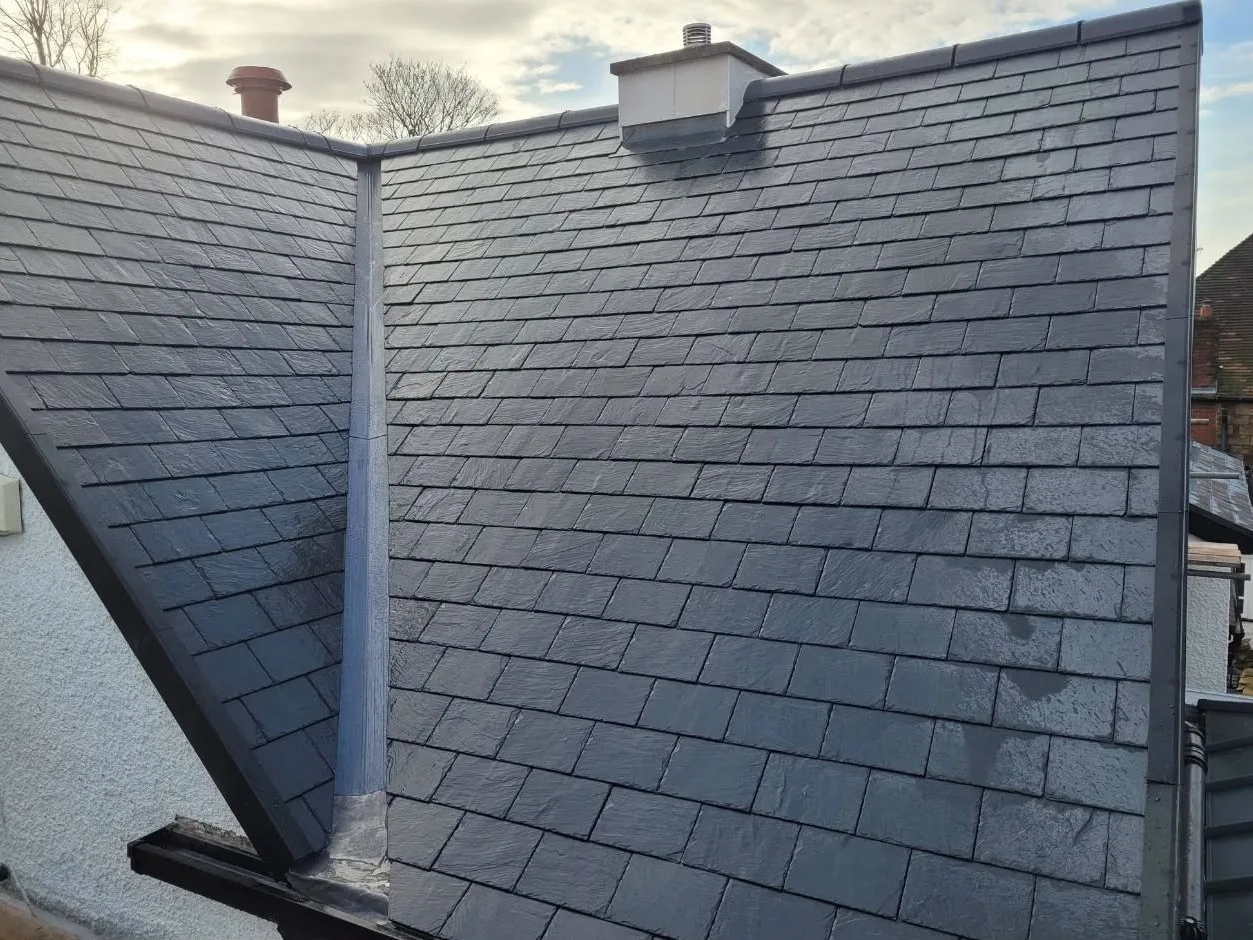
North of the centre is Brackland and the streets towards Northgate, which filled in after Northgate Station opened in 1846. The roofs here are mostly natural grey slate over gault brick terraces, with tall chimneys. The council uses Article 4 Directions on many of these unlisted houses to control changes to the main elevations. A like for like slate repair is usually simple. A change of material or new roof windows on the front slope is where we would check first.
Where to go next in Bury St Edmunds
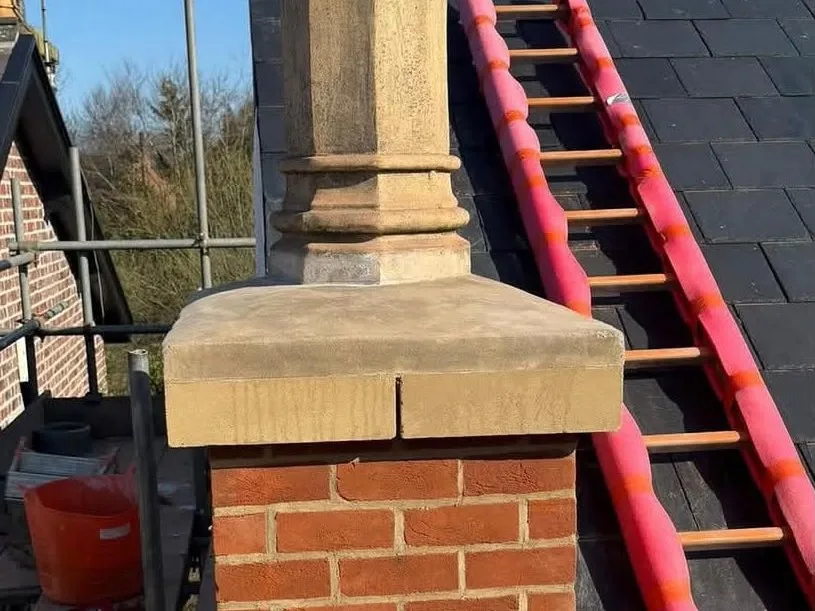
If the roof is past patching, our page on new roofs in Bury St Edmunds covers re-roofing in clay tile and slate, and relining parapet gutters while the scaffold is up. For leaks, slipped tiles and storm damage, see roof repairs in Bury St Edmunds. Stacks are covered on our chimney repairs page, and if you are not sure which way to go, our guide to whether to repair or replace a roof sets out how we decide.
Our services in Bury St Edmunds
Recent work near Bury St Edmunds
Roofing in Bury St Edmunds: your questions
Are you a roofing contractor for Bury St Edmunds, or only Norfolk?
We are a Norfolk company that works across west and north Suffolk, and Bury is inside the patch rather than at the edge of it. That includes the town and the villages around it across IP28 to IP33. Ring 07307 928751 and we will arrange a survey and a free written quote.
My house is in the conservation area. Can you still repair the roof?
Yes. Like for like repairs are usually straightforward. Changing the covering, adding roof windows, or any work to a listed building is where consent comes in. We check the position at survey and tell you what is likely to be needed before anything is ordered.
Water is coming through the ceiling but the tiles look fine. What is it?
On a Bury town house the usual suspect is a parapet or hidden valley gutter. Leaves and silt block the outlet, or the lead splits, and the water goes inwards instead of over an eaves. We get up to it, photograph what we find and show you before pricing the repair.
Can you repair the slate roofs on the Victorian terraces north of the centre?
Yes. Slipped slates on those roofs are usually down to rusted nails rather than worn slate, so sound slates can often be refixed. Where a whole slope has gone that way, we will tell you whether re-slating it is the better use of the money.
Ready to get started?
Tell us about your project and we'll be in touch.