
Suffolk
Roof repairs in Bury St Edmunds
Leaks traced properly across IP28 to IP33, on Georgian frontages, plain tile slopes and the newer housing around the town.
The leak that does the most damage in Bury is the one nobody sees coming. On an ordinary eaves gutter a blockage announces itself: the gutter overflows, the water runs down the outside of the building and stains the brick, and you get months of warning. A parapet or hidden valley gutter, which is how a great many of the town centre buildings drain, has nowhere to overflow to except inwards. It fills, it finds the lining, and the first anyone knows about it is a ceiling.
Where Bury roofs actually let go
Parapet and hidden valley gutters
Leaves, moss and a hundred years of debris. Once the lining has split as well, clearing it is only half the repair. We clear, inspect the lining properly and reline where it has gone rather than sealing over a split.
Cement pointing on soft brick
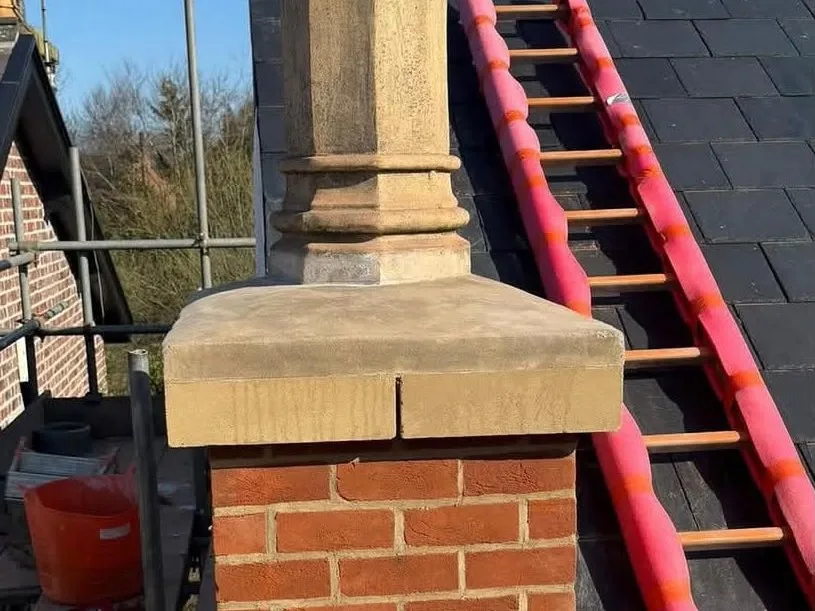
Historic brickwork wants a lime mortar. Repointed in modern cement it is harder than the brick around it, so the moisture has nowhere to leave except through the face of the brick, which then spalls over the following winters. We use a mix suited to what is there.
Slipped plain tiles on a steep slope
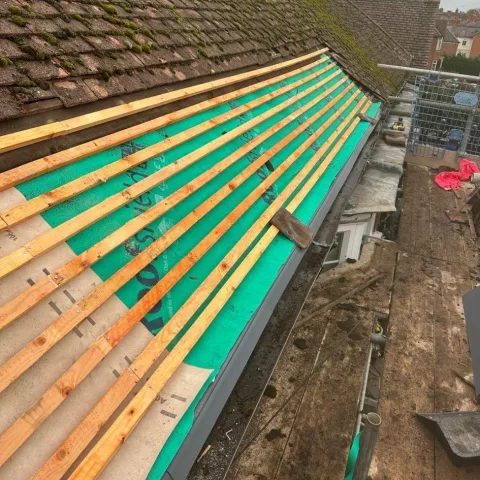
Plain tile is nailed and hung, and on a steep pitch a broken nib or a failed nail drops a tile without warning. One or two is a repair. A tile a month across the whole slope is nail fatigue and a different conversation.
Lead at abutments and dormers
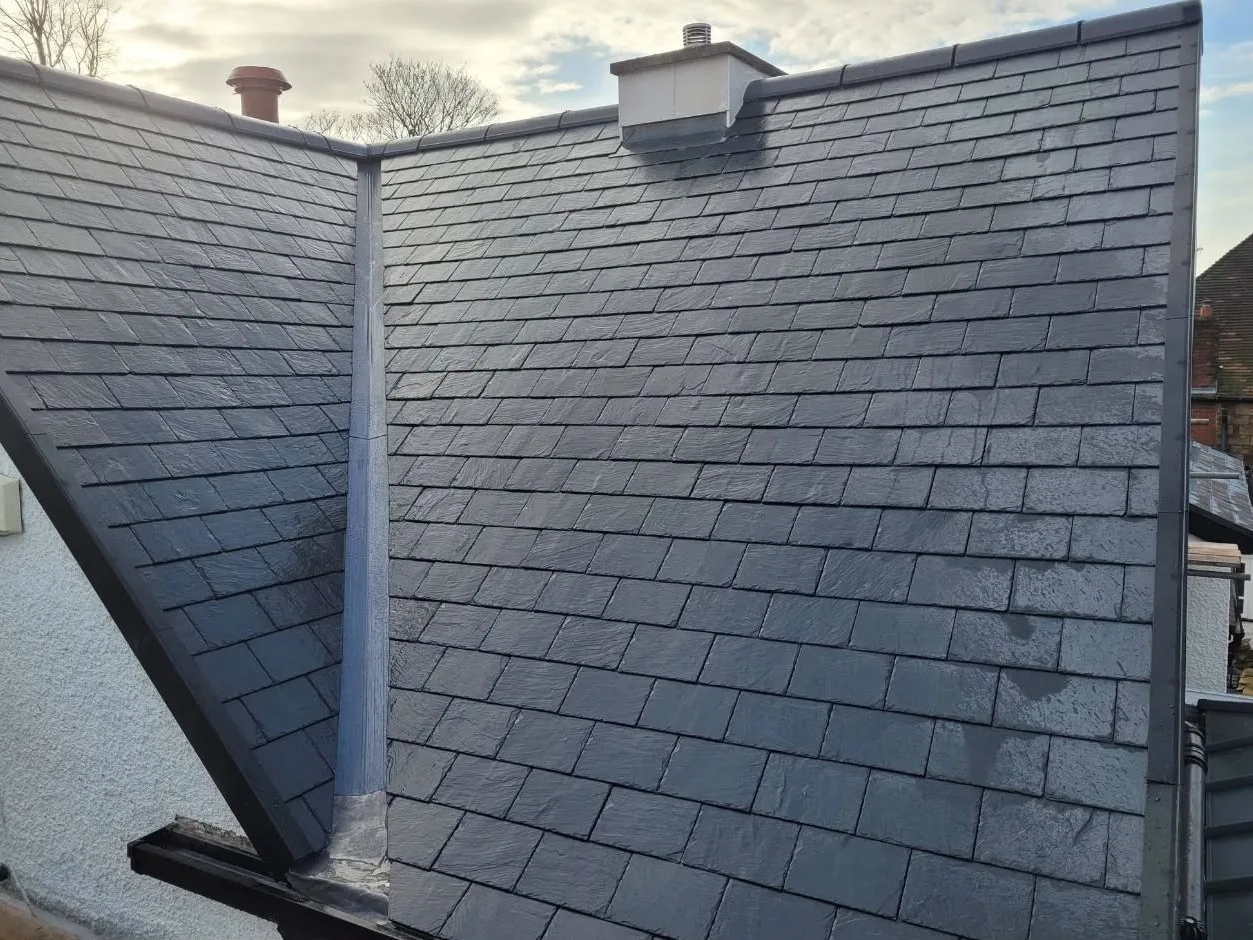
Where a roof meets a wall, a stack or a dormer cheek, original lead cracks along the fold lines with age and thermal movement. Sealant run along it is a holding measure, not a repair.
The newer housing
Around the outside of the town the faults are the modern ones. Mortar bedded verges that have cracked and let wind under the tiles, ridge tiles that have worked loose, and flat roofs on rear extensions that were laid with a nominal fall the deck has since lost. All three are worth converting or correcting when they are repaired rather than putting back exactly as they were to fail again on the same timescale.
Access in the centre
Working on a town centre roof in Bury is as much a logistics question as a roofing one. Frontages sit hard on the pavement, some of the streets around the market are pedestrianised for part of the week, and a good many buildings have a shop or an office underneath the roof that needs to carry on trading while we are on it. We work out how the access and the scaffold are going to happen at survey, and where a permit is needed we arrange it and include it rather than adding it once we are on site.
How we find it
Water runs along a rafter before it drops, so the stain on your ceiling is rarely underneath the way in. We work back from the stain to the source rather than sealing the nearest suspicious thing, and you get photographs of what we found and what we did about it. If the covering has reached the end and a repair would be money down the drain, we will say so instead of taking it.
Recent work near Bury St Edmunds
View all projects →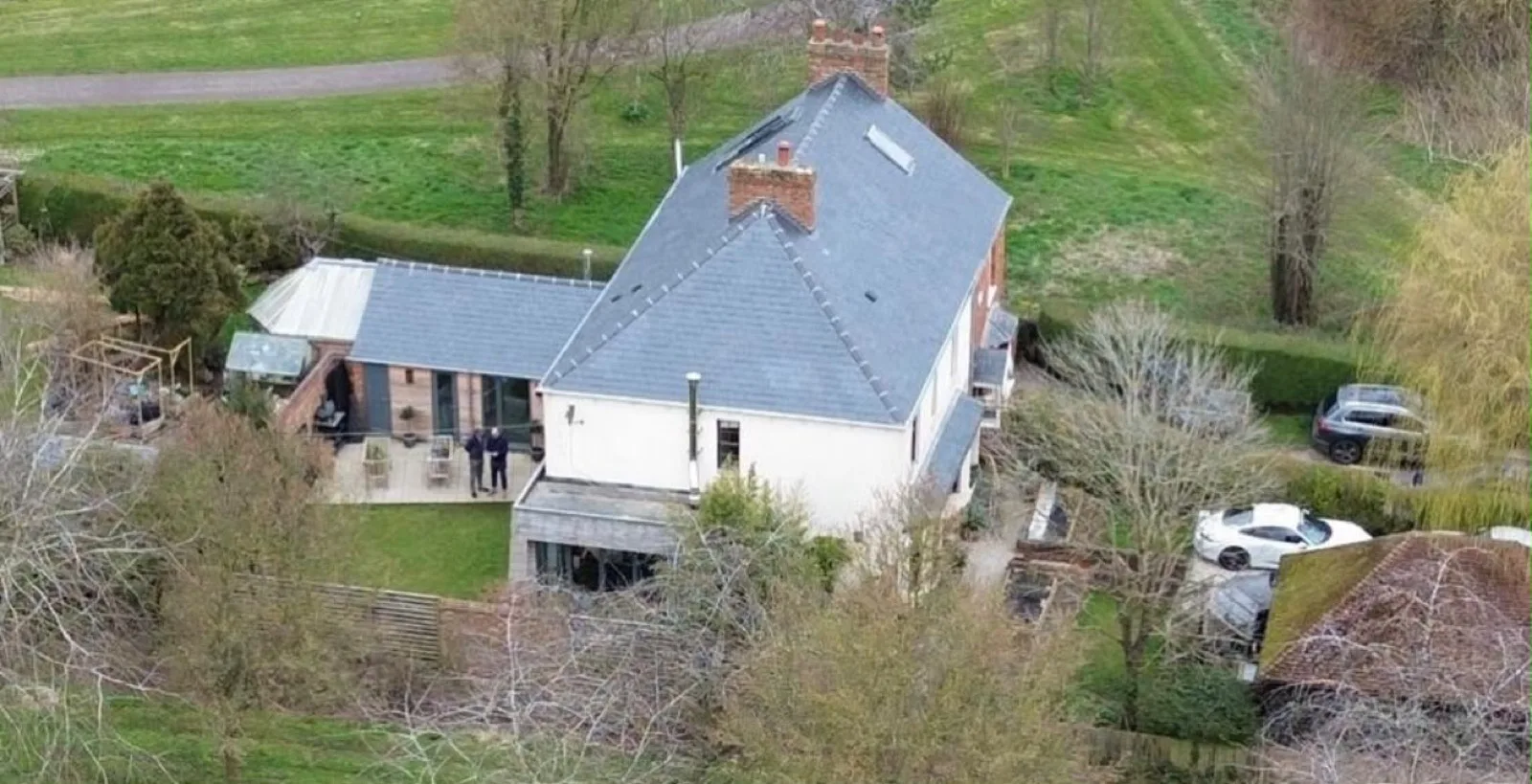
Roof repairs in Bury St Edmunds: common questions
There is a wet patch on my ceiling but my gutters look clear from the ground.
On a lot of Bury buildings the gutter you can see from the pavement is not the one that is leaking. A parapet or valley gutter sits behind the frontage and cannot be assessed from the ground at all. It needs looking at from above.
Can you repoint a chimney or a parapet in lime?
Yes, and on older soft brickwork that is what we will recommend. Cement on historic brick is harder than the brick and does more damage over a few winters than the failed pointing was doing.
Is it worth repairing a plain tile roof?
If the tiles are largely sound and the slipping is in one area, yes. Plain tile outlives its fixings comfortably. If tiles are coming off across every slope, the nails have gone generally and repairs turn into an annual bill.
Ready to get started?
Tell us about your project and we'll be in touch.